“En primeur is not simply a way of buying wine early. It is a commitment to a wine, a producer and a vintage before the finished bottle exists.”
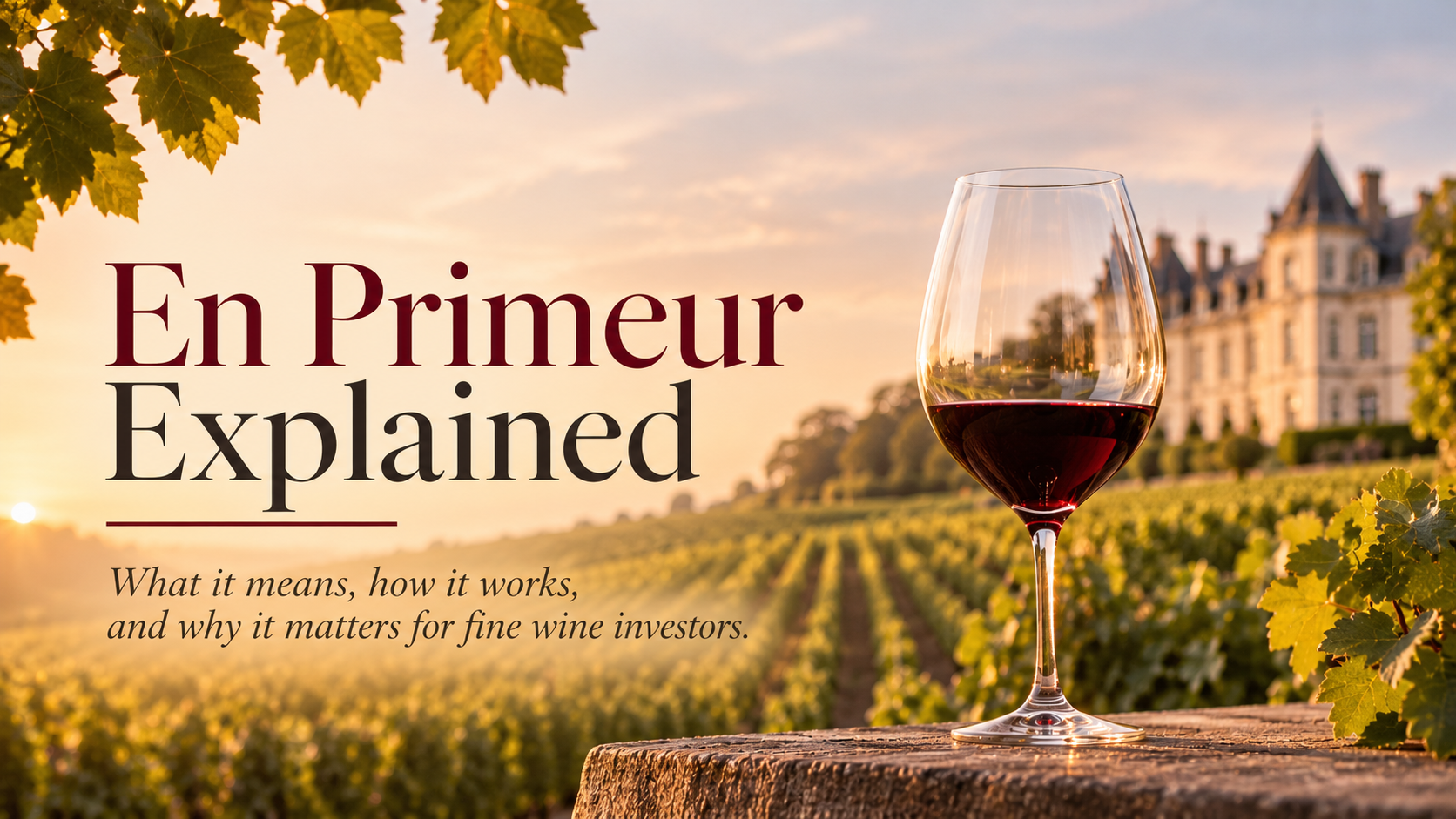
En Primeur Explained
Every spring, the fine wine world turns its attention to Bordeaux. Critics travel to taste young wines straight from the barrel, merchants publish their offers, and collectors decide which wines they would like to secure long before they are bottled. This annual ritual is known as en primeur, and it remains one of the most distinctive traditions in the wine trade.
Despite its long history, the system is often misunderstood. The terminology is French, the supply chain is layered, and the outcomes are not always what buyers expect. This guide explains what en primeur means, how a campaign unfolds, who is involved, how prices are set, and what every buyer should understand before taking part.
What Does En Primeur Mean?
En primeur is French for “in advance” or “early”. In wine, it describes the sale of a vintage while the wine is still maturing in barrel, long before it has been bottled. Buyers pay at the time of release and receive the finished wine roughly two to three years after the harvest.
It is often described as wine futures, although the comparison is not exact. The buyer is purchasing a specific quantity of a specific wine at a stated price, and the wine is delivered once it has been aged, bottled and shipped. The tradition is closely associated with Bordeaux, where it developed over centuries and where it still operates on the largest scale.
“En primeur pricing is best read as a market signal rather than a valuation.”
How an En Primeur Campaign Works
A campaign follows the rhythm of the wine itself. Although the details vary from year to year, the sequence is broadly consistent:
- Growing season: The vines grow and ripen through the year, shaped by the weather. The conditions during these months largely define the character of the vintage.
- Harvest: The grapes are picked in the autumn, once they reach the right ripeness.
- Winemaking: The grapes are pressed and fermented into young wine, which is then moved into oak barrels.
- Vintage assessment (spring): Critics, merchants and buyers taste unfinished barrel samples to judge the quality of the vintage. Scores and tasting notes are published.
- Offer (spring into early summer): Châteaux set their prices and offer the wine, usually in several tranches. Buyers pay upfront at the release price.
- Maturation: The wine keeps maturing in oak, typically for around eighteen months in total, before it is bottled.
- Arrival: Around two years after the harvest, the bottled wine is shipped to the buyer or held in professional bonded storage.
Because the purchase is made on the strength of a barrel sample, a buyer is relying on the producer’s track record, the quality of the vintage and the opinions of the critics who tasted it.
Who Is Involved: The Place de Bordeaux
In Bordeaux, most of the great wines are not sold directly by the château to the public. Instead, they pass through a long-established commercial network known as the Place de Bordeaux, which works in layers.
- Châteaux: The producers. They decide when to release their wines and at what price.
- Courtiers: Brokers who act as intermediaries between châteaux and négociants. They advise on pricing, negotiate the transaction and usually earn a commission of around 2 per cent.
- Négociants: Authorised trading houses that receive allocations of wine from the châteaux and distribute them onwards.
- Importers, distributors and merchants: The final links in the chain, who supply restaurants, retailers and private buyers around the world.
How Pricing Works
Châteaux rarely release their entire production at once. Instead, they sell in tranches, which are successive releases offered over a period of weeks. A smaller first tranche is often priced to test demand and build momentum. If interest is strong, later tranches may follow at higher prices. If demand is weak, prices may be held or adjusted. A few practical points are worth knowing:
- Prices are usually quoted per case, commonly of six or twelve bottles, rather than per bottle.
- Prices are usually quoted “in bond”, which means before UK duty and VAT. These are normally payable only when the wine leaves bonded storage.
- Release prices reflect expectations, not certainty. They are set by what the château believes the market will accept, informed by critics’ scores, the quality of the vintage and recent trading.
- The system works best when demand exceeds supply. In weaker markets, wines can be difficult to sell at the prices requested.
Why Buyers Choose En Primeur
The appeal of en primeur has traditionally rested on a handful of benefits:
- Access: Some wines are made in very small quantities and can be difficult to find once bottled. Larger formats, such as magnums, are also sometimes only available at this stage.
- Early pricing: Wines are offered before the wider market has fully reacted to critics’ scores and the reputation of the vintage.
- Provenance: Wine purchased at release and stored correctly has a clear and traceable history from the very beginning.
- Cash flow for producers: For the châteaux, early sales provide income while the wine is still ageing, which helps to fund the costs of production.
Conclusion
En primeur remains one of the most fascinating traditions in the wine world. It offers early access to some of the world’s most sought-after wines, but it also asks buyers to be patient, to trust the producer and to accept a degree of uncertainty. It is best approached with a clear view of the process, a realistic view of the price and a genuine appreciation for the wine itself.
As always, feel free to reach out to our team if you would like to talk through how en primeur works in practice.
Vinho
Your Partner in Fine Wine